

How to Clear Google Chrome Browser History & Cache?
Did you know a cluttered browser can slow you down? Over time, all the browsing data can make your Google Chrome slow.
Clearing your browser’s history and cache is easy and helps a lot. It frees up space and makes browsing better.
As you browse, your browser saves lots of data. This includes your browsing history and cache. In this article, we’ll show you how to clear this data. We’ll give you a step-by-step guide.
Why Clearing Your Chrome History and Cache Matters
Clearing your Chrome history and cache is a big step for your privacy and browser speed. It makes a big difference in keeping your data safe and making your browsing smoother.
Privacy Benefits of Regular Clearing
Regularly clearing your Chrome history and cache has many privacy benefits. It erases your online tracks, making it hard for others to see your personal info. This is key when using public computers or sharing devices with others.
It keeps your sensitive data safe from being stored on your device. This lowers the chance of data leaks.
Performance Improvements After Clearing Data
Clearing your Chrome cache and history also boosts your browser’s speed. Cached data and browsing history can slow it down over time. By removing them, you free up space and make Chrome work faster.
Understanding the value of clearing your Chrome history and cache helps you control your browsing. It keeps your privacy and browser speed at their best.
Understanding Browser History vs. Cache
It’s important to know the difference between browser history and cache. Google Chrome collects different types of data. This data can affect your privacy and how you browse the web.
What Browser History Contains
Your browser history in Chrome keeps track of all websites you’ve visited. This info is saved on your device. You can see it by going to the browser’s history menu. Clearing your browsing history helps keep your browsing private, which is key on shared devices.
What Browser Cache Stores
The browser cache saves parts of websites you visit, like images and scripts. This makes Chrome load websites faster when you go back. But, too much cache can slow your browser down. So, clearing your cache is a good thing to do.
Other Browsing Data Worth Clearing
There’s more data you can clear to boost your privacy and browser speed.
Cookies and Site Data
Cookies are small files websites use to remember your preferences or login info. Clearing cookies logs you out of sites and might erase some preferences.
Form Autofill Information
Chrome saves info you fill out in forms. This makes it easier to fill out similar forms later. Clearing this data removes those saved entries.
Passwords and Sign-in Data
Chrome also stores passwords for different sites. Clearing this data means you’ll have to enter your passwords again next time you visit.
How to Clear Google Chrome Browser History & Cache on Windows
To keep your privacy safe and your browser running smoothly, you need to clear Google Chrome’s history and cache on Windows. You can do this in two ways: through the Chrome settings or by using keyboard shortcuts.
Using Chrome Settings Menu
Clearing your browsing data through Chrome settings is easy. Here’s how:
Step 1: Accessing Chrome Settings
First, open Google Chrome on your Windows computer. Click the three vertical dots in the top right corner. Then, choose “Settings” from the menu. Or, type chrome://settings/ in the address bar and hit Enter.
Step 2: Finding Clear Browsing Data
On the Settings page, scroll down to “Privacy and security.” Click “Clear browsing data.” This opens a tab where you can pick what data to delete.
Step 3: Selecting Data Types to Clear
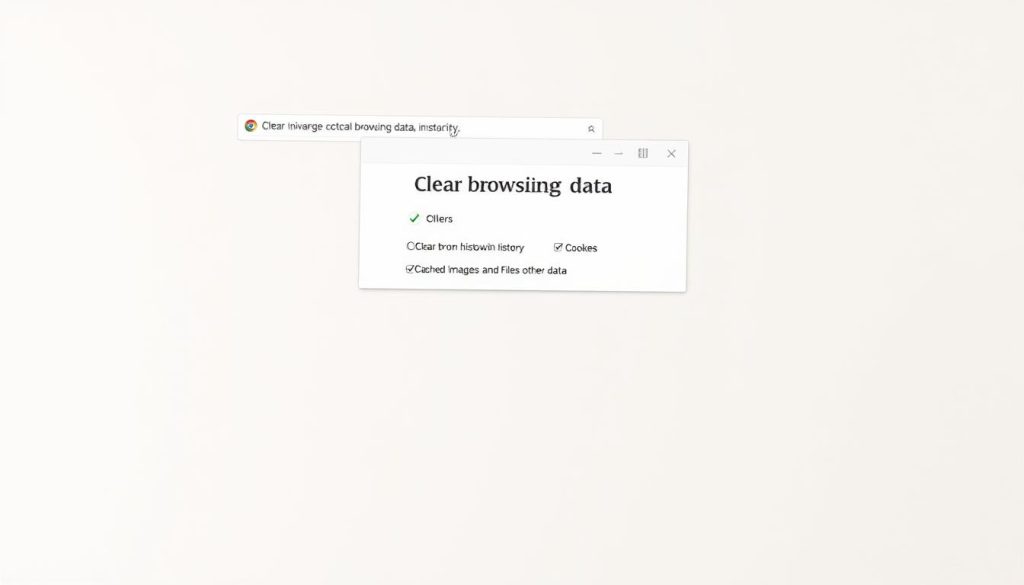
In the “Clear browsing data” tab, you can choose what to erase. This includes browsing history, cookies, and cached images. Pick what you want to clear and the time frame. Then, click “Clear data” to finish.
Using Keyboard Shortcuts
Google Chrome also offers keyboard shortcuts to clear data quickly.
Ctrl+H Method for History
Pressing Ctrl+H opens the browsing history tab. From there, click “Clear browsing data” to see the options.
Ctrl+Shift+Delete for Direct Access
For a quicker option, press Ctrl+Shift+Delete. This opens the “Clear browsing data” tab right away. You can then quickly select and clear your data.
Clearing Chrome Data on Mac
Clearing Google Chrome data on your Mac is easy and can make your browser run better. It also helps keep your privacy safe. The steps are similar to other browsers, but there are some special Mac steps to follow.
Step-by-Step Mac Instructions
Using Chrome Menu Options
To start, open Google Chrome on your Mac. Click “Chrome” in the top menu bar, then choose “Clear Browsing Data.” This opens a new tab where you pick what data to clear and for how long.
Select the data you want to remove, like browsing history, cookies, and cached images. You can clear data from the last hour, day, week, month, or all time.
Mac-Specific Keyboard Shortcuts
Mac users can use keyboard shortcuts to quickly clear data. Press Command + Shift + Delete to open the clearing tab directly.
Mac-Specific Tips and Considerations
Remember, clearing Chrome data logs you out of websites and may delete saved data. Clear data when you’re not using Chrome to avoid problems.
If you’re worried about privacy, set Chrome to clear data automatically when you close it. Go to Chrome settings, then “Privacy and security.” Turn on “Clear cookies and site data when you close Chrome.”
Removing Browsing Data on Chromebooks
Clearing your browsing data on Chrome OS is easy and boosts your browsing. As a Chromebook user, you can manage your history and cache. This keeps your browsing private and fast.
Chrome OS-Specific Instructions
To clear data, open Chrome, click the three dots, and choose “More tools” > “Clear browsing data.” Pick the time range and what data to delete, like history and cookies.
Managing Storage on Chromebooks
Checking your storage helps keep your Chromebook running well. Go to Chrome settings and find the storage section.
Checking Storage Usage
To see storage usage, go to Chrome settings, scroll to “Advanced,” and click “Storage.” You’ll see how much data is taking up space.
Optimizing Chrome Performance
Improving Chrome’s speed means clearing data and managing extensions. Make sure Chrome OS is up to date. This removes cache quickly and keeps your Chromebook fast.
Mobile Methods: Clearing Chrome on Android
Managing your Chrome browsing data on Android is key for privacy and performance. Clearing your history and cache protects your data and keeps your browser running well.
Using Chrome App Settings
To clear Chrome data on Android, you need to get into the Chrome app settings. It’s easy and takes just a few steps.
Step 1: Opening Chrome Settings
First, open the Chrome app on your Android. Tap the three-dot menu icon in the top right, then choose “Settings” from the menu.
Step 2: Finding Privacy Options
Scroll down to “Privacy” and tap it. This takes you to where you can manage your browsing data.
Step 3: Clearing Browsing Data
Tap “Clear browsing data” and pick what you want to clear, like history, cookies, and images. Then, tap “Clear data” to confirm.
Clearing Specific Site Data
You can also clear data for specific sites. This is handy if you want to remove data from one site without clearing everything.
Site-Specific Settings
To clear data for a site, go to Chrome settings, then tap “Site settings.” Here, you can manage data for individual sites.
Managing Permissions
You can also manage permissions for sites, like camera, microphone, or location access. This lets you control what sites can do on your device.

By following these steps, you can wipe out your Chrome history and erase cache browser data on your Android. This improves your privacy and browsing experience.
Mobile Methods: Clearing Chrome on iOS
Clearing Google Chrome data on your iOS device is easy and boosts privacy and performance. It’s key for a smooth browsing experience on both iPhone and iPad.
iPhone and iPad Instructions
Accessing Chrome Settings
To clear your Chrome data on iOS, start by opening the Chrome app. Tap the three dots at the bottom right and choose “Settings” from the menu.
Selecting Data Types to Clear
In the Settings menu, tap “Privacy” and then “Clear Browsing Data.” You’ll see options to clear browsing history, cookies, and site data. Pick what you want to remove and tap “Clear Browsing Data” to confirm.
iOS Restrictions and Workarounds
Working with iOS Privacy Settings
iOS has privacy settings that impact Chrome’s data handling. Check your iOS settings under “Settings” > “Chrome” to see how Chrome is set up for data handling.
Syncing Considerations
If you’re signed into Chrome with your Google account, your data syncs across devices. Clearing data on your iOS device will also clear it on other devices. Keep this in mind when managing data across platforms.
Advanced Chrome Clearing Options
To enhance your Chrome experience, explore advanced clearing options. These options let you manage your browser data more effectively. You can customize how you clear your browsing history, cache, and more.
Selecting Specific Time Ranges
Chrome lets you clear data by time range. This gives you control over how much data to delete. It’s great for keeping your privacy while keeping useful data.
Last Hour Clearing
Clearing data from the last hour is perfect for quick privacy. It removes recent history without touching older data. It’s good for public or shared browsing.
Last 24 Hours Clearing
For a deeper clean, clear data from the last 24 hours. This removes a day’s worth of history and cache. It’s a good way to keep your privacy.
All Time Clearing
Choosing “All time” clears everything. It resets your Chrome browser completely. This is a big step, so think carefully before doing it.
Choosing What Types of Data to Remove
Chrome lets you pick what data to delete. You can clear history, cookies, images, and more. This gives you a detailed way to manage your data.
Selective Clearing Options
With selective clearing, you can choose what to delete. For example, you can clear images and files but keep your history. This is useful for targeted cleaning.
Understanding Data Dependencies
It’s important to know how data works together. Clearing cookies can log you out, while clearing images can save space but slow sites. Think about these effects before clearing.
Understanding Advanced Settings
Chrome has advanced settings for more control. These include options for app data and content licenses.
Hosted App Data
Hosted app data is stored by web apps. Clearing it can fix app issues but may log you out or delete saved data. Be careful with this.
Content Licenses
Content licenses are for media you’ve accessed or bought through Chrome. Clearing them might stop you from viewing content offline. Consider this before clearing.
Setting Up Automatic History and Cache Clearing
To keep your Chrome browser running smoothly, setting up automatic history and cache clearing is key. This ensures your browsing data doesn’t build up and slow you down.
Configuring Auto-Delete Settings
Chrome lets you set up auto-delete settings. This way, you control when and how your browsing data is cleared.
Chrome’s Built-in Options
Chrome’s built-in settings let you clear browsing data automatically at set times. To get to these settings, go to Chrome’s settings menu. Then, click on “Privacy and security,” and then “Clear browsing data.”
Setting Time Periods
You can pick how often you want to clear data, from the last hour to all time. Picking the right time is important for keeping your privacy and convenience in balance.
Scheduling Regular Cleanups
For more advanced scheduling, there are options beyond Chrome’s built-in settings.
Using Chrome Policies
For business users, Chrome policies can automatically clear browsing data for everyone in your organization. You need to set up specific policies in Chrome’s admin settings.
Third-Party Solutions
There are also third-party extensions that can automate clearing your browsing data. These extensions give you more control over when and what data is cleared.
Troubleshooting Common Issues After Clearing Data
Clearing your browsing data can sometimes cause problems. It’s important for privacy and performance. But, it might lead to unexpected issues. Here, we’ll look at common problems and how to fix them.
Fixing Login Problems
Clearing data often logs you out of websites. This can be a big hassle, if you were in the middle of something important.
Recovering Saved Passwords
Clearing data means you might have to log in again. To avoid this, use a password manager like LastPass or 1Password. They keep your login info safe.
Managing Cookies for Important Sites
Some sites use cookies to remember you. After clearing data, you might need to allow cookies again. You can change Chrome settings to allow specific cookies.
Resolving Website Display Issues
Clearing data can also mess up how websites look. You might see broken layouts or missing content.
Reloading Properly
Try reloading the page with Ctrl + R (Windows) or Cmd + R (Mac). This can fix display problems.
Fixing Broken Layouts
If a site looks broken, clear its cache. Go to Chrome’s settings, then “Clear browsing data.” Choose the site’s data to remove.
Privacy Extensions for Better History Management
Explore Chrome’s privacy extensions for better control over your browsing data. These tools help manage your browsing history and keep your privacy safe. By adding these extensions to your routine, you can automate clearing history and cache. This makes it easier to keep your data fresh.
Top Chrome Extensions for Privacy
Several Chrome extensions are great for managing your browsing history and boosting privacy. Here are a few:
Click&Clean
Click&Clean lets you clear your browsing data with just one click. It can remove cookies, cache, and history. This makes it simple to keep your privacy intact.
History Cleaner
History Cleaner automates clearing your browsing history. You can set it to clean your history at regular times. This way, your data stays current without you having to do anything.
Privacy Badger
Privacy Badger is from the Electronic Frontier Foundation (EFF). It blocks trackers and ads. This helps protect your privacy while you browse.
Setting Up Extensions for Automatic Clearing
To get the most out of these extensions, you need to set them up right. This means choosing the right settings and scheduling cleanups.
Configuration Options
Most privacy extensions let you pick what data to clear. You can choose to clear history, cookies, or cache. Pick what works best for your privacy needs.
Scheduling and Automation
Scheduling is a big plus for many privacy extensions. By setting a schedule, you can automate clearing your data. This means your data gets cleaned regularly without you having to do it manually.
Maintaining Your Digital Footprint Beyond Chrome
Clearing your Google Chrome browser history and cache is just the first step. You should also think about your online activities on different platforms and devices. Cleaning your browsing data on all devices helps keep your online experience private and secure.
To keep your digital presence safe, be careful about the data you share online. Make sure to clean your browsing history and clear data in other browsers too. This protects your privacy and keeps your personal info safe from unauthorized access.
Using privacy-focused tools and services can also help. Consider a VPN, password manager, and tracking blocker for better online security. These steps make your online experience more private and secure.